Every uninsulated valve wastes 8,500 kWh a year.
Uncontrolled heat loss drives up your fuel costs, while heat gain on cold lines causes surface condensation that compromises system integrity. With insulation solutions we design and install ourselves end to end, we safeguard your facility's thermal stability and process safety.
Removable and reusable insulation jackets for valves, flanges, heat exchangers and equipment. They cut energy loss, preserve maintenance access and support HSE compliance.
Fixed insulation protected with aluminum or galvanized cladding for pipelines, tanks and equipment surfaces. We handle the whole process with our own team, from survey to installation.
The scope of the international standard behind thermal insulation calculations, and its impact on site audits.
How condensation on cold lines affects corrosion and equipment lifespan, and how to prevent it.
From surface temperature to unit energy price; a step-by-step calculation using real field data.
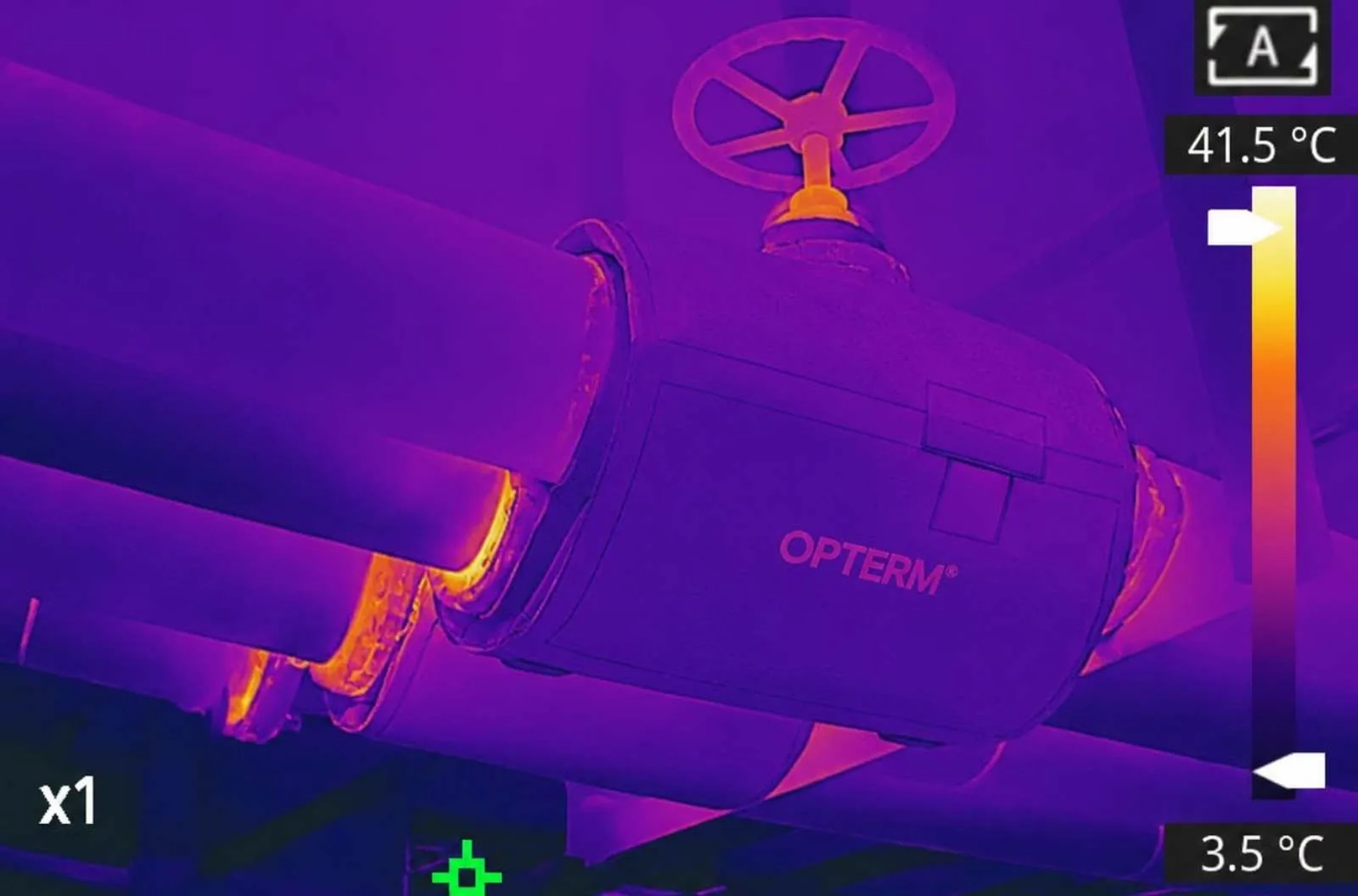
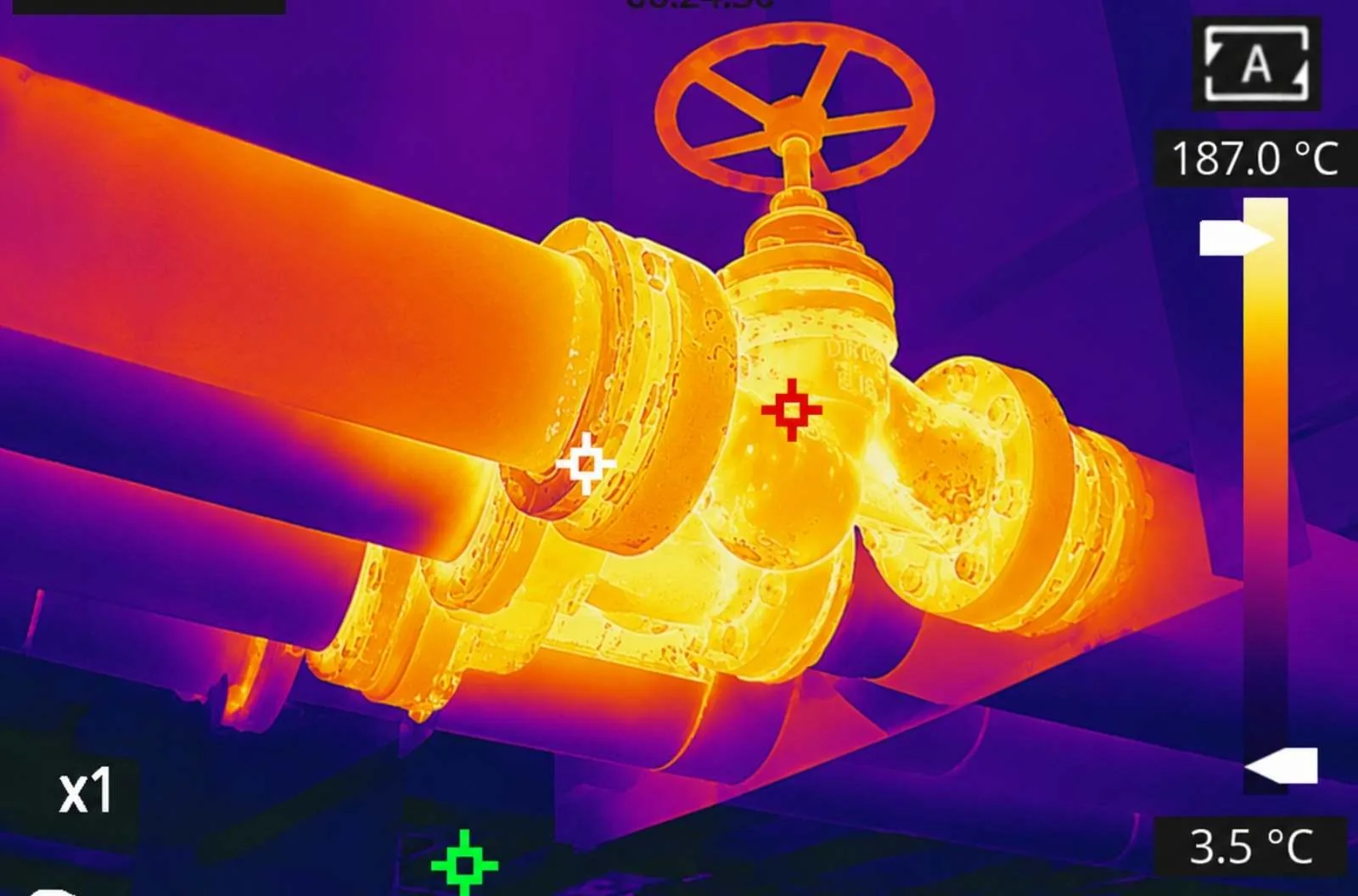
A valve insulation jacket is a removable insulation cover wrapped around valves and fittings that can be easily taken off and refitted. On hot lines it reduces surface temperature and heat loss; on cold lines it prevents surface condensation and the corrosion that comes with it. Unlike fixed insulation, it lets maintenance crews access the valve in seconds, which is why it is the preferred choice for any valve, flange, or pump connection that needs periodic inspection.
The payback period depends on surface temperature, valve diameter, and annual operating hours, but field measurements typically show a payback of 6 to 12 months. On high-temperature lines running 24/7, this can drop to as little as 4 months. For an exact figure, we schedule a site audit with you and run the calculation through our Optimizi engineering platform.
An uninsulated valve radiates far more heat than insulated pipe on the same line. The reason is that the valve body's complex geometry can't be covered by standard pipe insulation. A typical industrial valve running at 150-200°C can account for thousands of kWh of loss per year on its own. Multiply that across the hundreds of valves in a typical plant, and it becomes a significant line item on the annual energy bill.
The widely accepted threshold is 60°C (140°F). Contact with a surface above this for even a few seconds can cause serious burns. Many industrial valves run above 150°C when uninsulated. A valve insulation jacket typically brings the outer surface temperature down below 40-50°C, removing this hazard and making compliance with workplace safety regulations straightforward.
A fabric expansion joint is a flexible connector that absorbs thermal expansion, vibration, and axial movement in ductwork and flue systems. It is the preferred choice on high-temperature flue gas lines where metal bellows expansion joints fall short. It is widely used at duct-to-flue connections in cement, power generation, and iron & steel plants.
An uninsulated heat exchanger sacrifices heat transfer efficiency and continuously loses energy through its shell surface. In steam or high-temperature systems, this loss partly defeats the exchanger's core purpose: heat recovery. Removable heat exchanger insulation jackets prevent this loss while still allowing for the periodic cleaning and maintenance the equipment needs.
Sheet metal cladding (conventional) insulation is a fixed insulation system applied to tanks, pipes, and equipment surfaces, protected on the outside by aluminum or galvanized sheet metal; it is economical on large, unchanging surfaces. A valve jacket, by contrast, is removable and is the preferred choice for points that need frequent maintenance, such as valves, flanges, and pumps. The two methods are usually applied together in the same facility, complementing each other.
We work across every high-temperature process industry, including cement, petrochemical, steel, automotive, glass, ceramics, power generation, and food processing.
Optimizi is an engineering calculation platform developed by OPTERM. It calculates energy loss and payback period from surface temperature and basic parameters. It is not a publicly open application; it is made available specifically to our clients in the site audit process and to authorized users.


 Türkçe