At OPTERM we design, manufacture and install conventional and removable insulation systems for pipelines, tanks, valves and process equipment. Removable jackets are used where frequent maintenance is needed, and metal-clad conventional insulation on long, fixed surfaces; most plants use both.
The right method depends on surface geometry, maintenance frequency, operating temperature and ambient conditions.
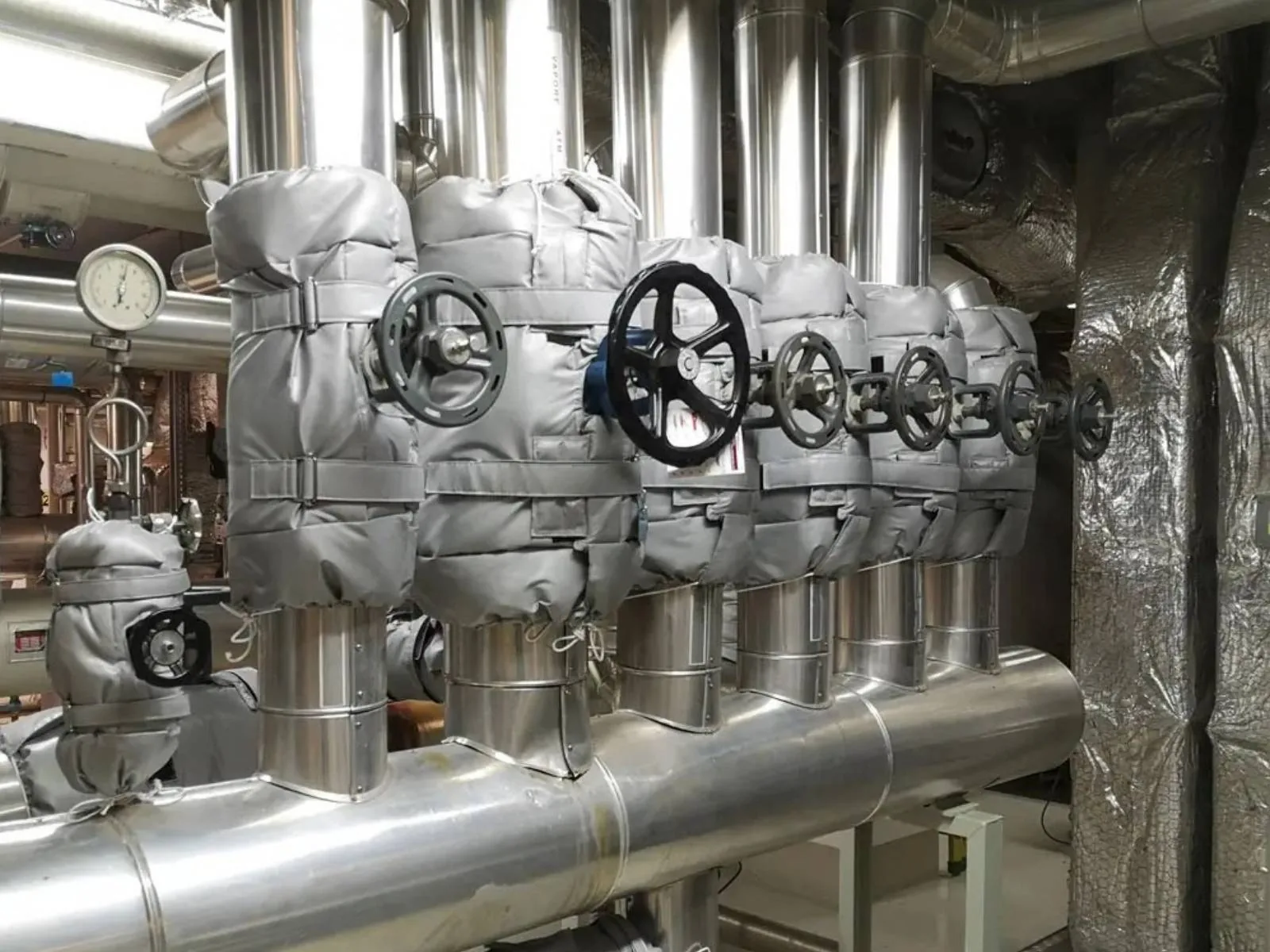
Jackets that are removed and refitted on equipment opened for maintenance, such as valves, flanges, heat exchangers, boiler doors, extruders, turbines and engine exhausts.
Explore jacket solutions →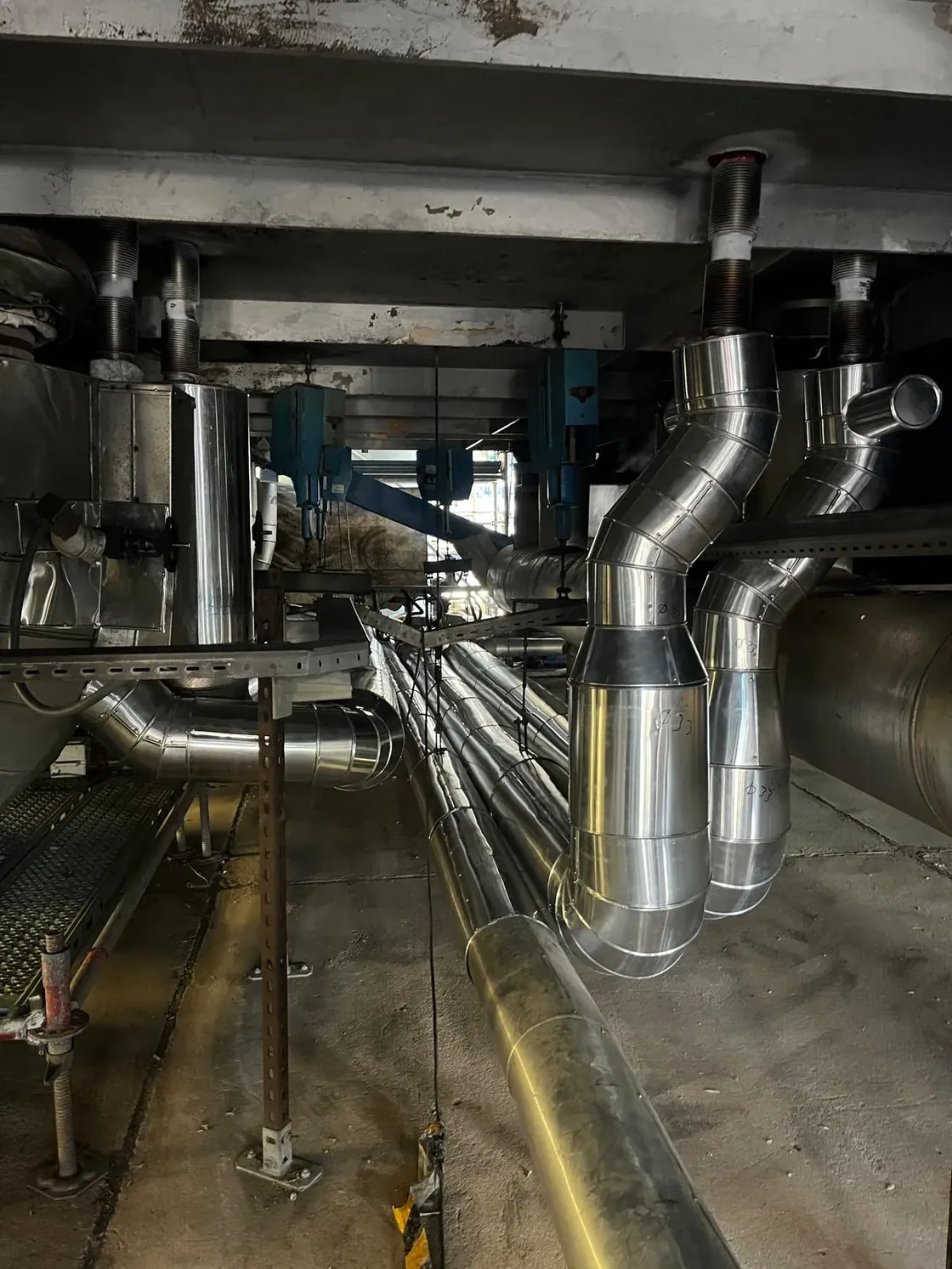
Mineral wool insulation with aluminium or stainless steel cladding for pipelines, storage tanks, boilers and reactor shells.
Explore conventional insulation →Jackets around the body, bonnet and flanges, with openings for the stem, handwheel and actuator.
Details →Removable jackets for flanges and pipe fittings, boiler doors, pumps and access openings.
Details →Jackets removed section by section for shell-and-tube, plate and spiral exchanger shells, heads and covers.
Details →Jackets for the manways, nozzles, valves and instrument connections of storage and process tanks.
Details →Modular jackets for the shells, heads, bottoms and nozzles of batch and jacketed reactors.
Details →Jackets for extruder barrels, die heads and heater zones, with heater and sensor openings.
Details →Sectional jackets for turbine casings and flanges, numbered in removal order.
Details →Jackets for engine exhaust lines, silencers, DOC and SCR equipment.
Details →Vibration-resistant jackets for gas engine exhaust manifolds and turbocharger areas.
Details →Heated and insulated IBC and drum jackets that keep viscous products flowing.
Details →Multi-layer fabric expansion joints that absorb thermal expansion and vibration in flue gas and hot air ducts.
Details →Acoustic enclosures and panels for compressors, pumps, fans and generators, designed to a target sound level.
Details →Flexible protection systems for critical valves, actuators and equipment, selected to the fire scenario and specification.
Details →The two methods are not alternatives but complements. The deciding factor is how often the surface needs to be accessed.
In both cases the insulation thickness is calculated from the operating temperature, ambient conditions and target surface temperature. If you do not know the condition of your existing insulation, we can start with our thermal audit service.


 Türkçe
 Deutsch
 Français
 Nederlands
 Svenska
 Norsk
 Dansk