In petrochemical, refinery, energy and chemical plants, keeping critical valves and equipment functional during a fire matters for safe shutdown and response. OPTERM assesses flexible, removable passive fire protection systems for this equipment against the project's fire scenario and technical specification, prepares them to measure and installs them on site.
Passive fire protection limits the heat reaching an equipment surface during a fire, delaying the point at which steel and sensitive components reach their critical temperature. Flexible, removable protection jackets are preferred on equipment that needs maintenance access, such as emergency shutdown valves, actuators, flanges and instrument boxes. Unlike fixed coatings, they can be opened for maintenance and inspection and refitted.
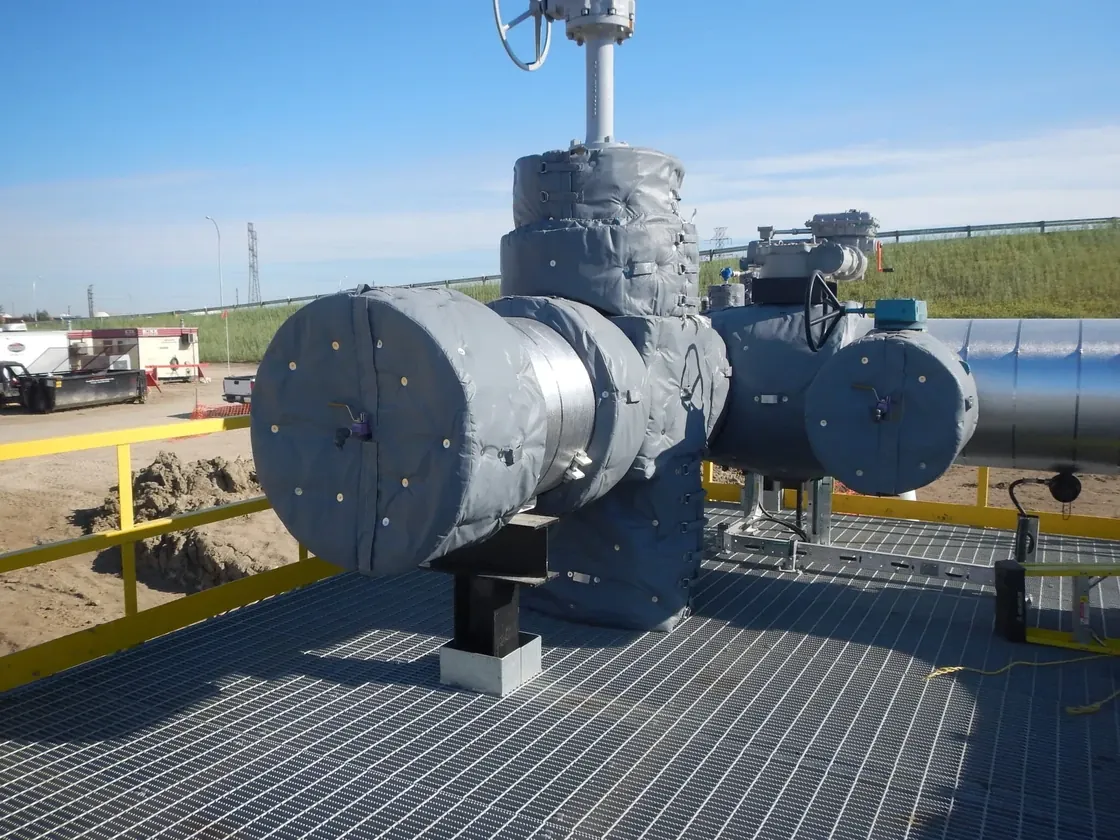
Hydrocarbon pool fires, jet fires and cellulosic fires differ in heat flux and rate of temperature rise. The system is selected for the scenario defined in the project.
Technical specifications usually call for a system tested to a specific standard. The test documents of the proposed system are assessed against the specification at the quotation stage.
The temperature the protected equipment must not exceed and the protection time are defined by the owner based on the plant's fire and risk assessments.
ESD valves and bodies that must close or stay open during a fire.
Valve actuators and their associated control components.
Flanged joints whose sealing must be maintained.
Boxes and panels where control signals must continue.
Tray and junction areas carrying critical control cables.
Short pipe and equipment sections the specification requires to be protected.
For our thermal insulation jackets, see removable insulation jackets.
No. A thermal insulation jacket is designed to reduce energy loss and surface temperature in normal operation. A passive fire protection system is built from materials and details tested for fire conditions; standard thermal insulation jackets are not used for fire protection.
Protection time and critical temperature are defined by the owner or project engineering based on the plant's fire and risk assessments. OPTERM assesses the system that meets these requirements.
Yes. It is installed with facings suited to outdoor conditions and details that prevent water ingress; suitability is checked against the conditions of the selected system.
The technical specification, fire scenario, protection time, list of equipment to be protected, dimensions and photographs are required for the assessment.


 Türkçe
 Deutsch
 Français
 Nederlands
 Svenska
 Norsk
 Dansk