Some products thicken or solidify in cold conditions, making pumping, filling and dosing difficult. IBC and drum heating jackets wrap the container to bring the product to its working temperature or keep it there. OPTERM identifies the right jacket solution for the product, container type and conditions of use.
A heated jacket delivers energy to the product through its heating element; it is used to warm a cold product or keep it hot for long periods. A passive insulation jacket generates no energy; it slows heat loss from a product that is already hot. In many applications both functions are combined: insulation over the heating layer helps the heat go into the product rather than the surroundings.
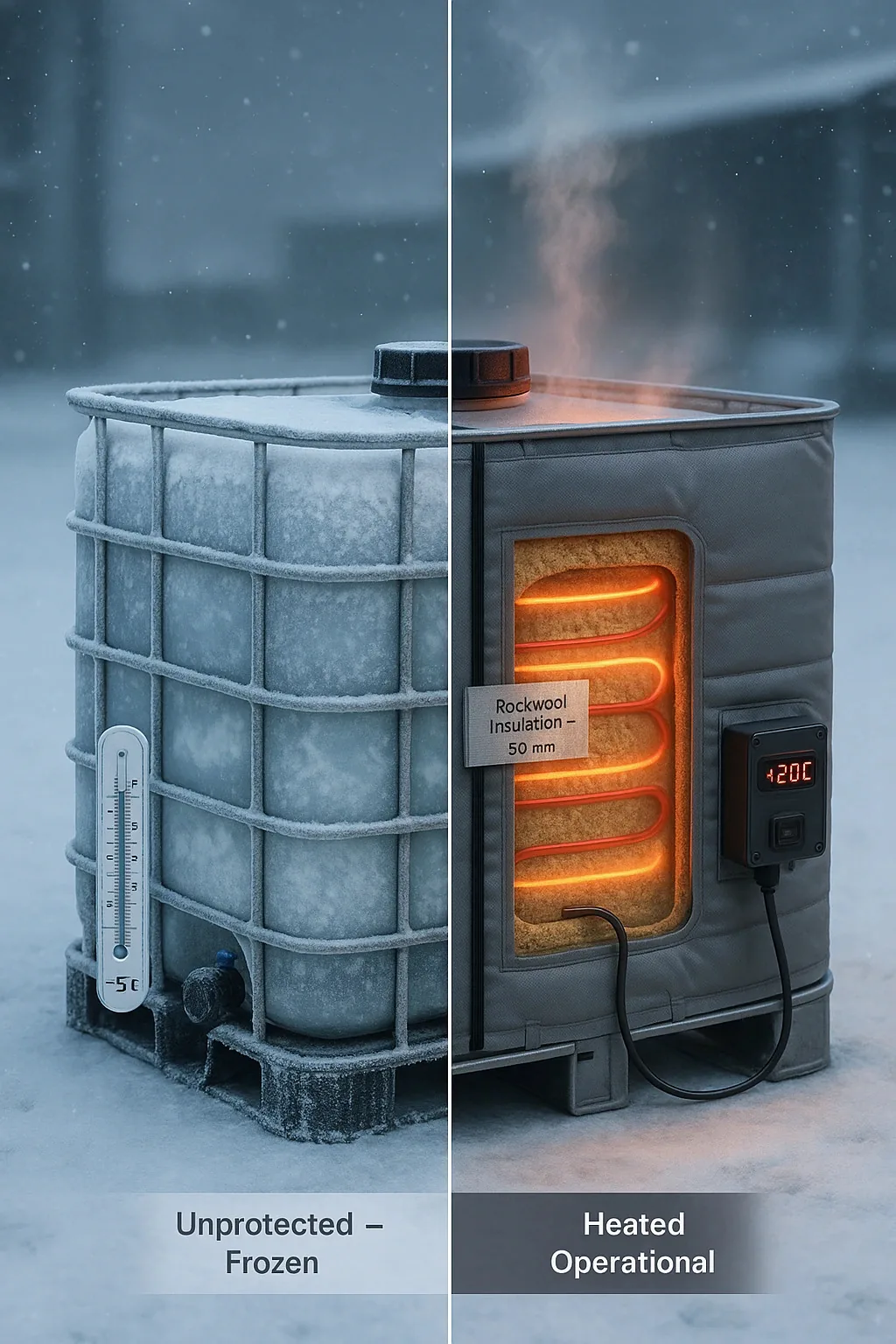
Viscous products flow more easily as temperature rises. The target temperature is set from the product's technical data sheet; the product's maximum permitted temperature must not be exceeded.
Temperature control, container material (especially plastic IBCs) and the area of use are assessed together. In potentially explosive atmospheres only equipment suitable for that environment may be used; this should be stated in the enquiry.
An insulated jacket and lid reduce heat loss to the surroundings, which can help shorten heating time and reduce energy demand.
Resins, hardeners and adhesive raw materials that thicken in the cold.
Petroleum-based products that must be kept warm to stay fluid.
Honey, syrups, vegetable oils and chocolate, whose flow changes with temperature.
Chemicals that must be protected against freezing or crystallisation.
Raw materials that must reach a set temperature before filling.
Paints and coatings that must be brought to application viscosity.
IBC and drum jackets can be supplied in standard sizes or prepared to requirement. For the right selection we assess:
Heater power, temperature control range and equipment documentation are specified in the quotation according to the selected system.
For fixed storage tanks and process lines, see tank and pipe insulation and pipe and equipment insulation jackets.
The time depends on product quantity and specific heat, starting and target temperatures, jacket heating power and ambient temperature. A time estimate is therefore made at the quotation stage using product and usage information.
Yes, but the temperature limits of the plastic container must be respected. Temperature-controlled heating and even heat distribution over the surface are important for these containers.
If the product is filled hot and needs to stay warm for a period, a passive insulation jacket may be enough. A heated jacket is needed to warm a cold product or maintain temperature for long periods.
Yes. Heated and insulated jackets can be used to prevent products freezing or crystallising in winter; the outer facing is chosen for moisture and UV.


 Türkçe
 Deutsch
 Français
 Nederlands
 Svenska
 Norsk
 Dansk