We detect, calculate, record and track insulation-related heat losses in your plant over time. For the needs identified in the audit, OPTERM also prepares the installation quote and carries out the work.
Exposed, damaged or under-insulated points are identified with a thermal camera and site photographs.
The heat loss of each point is calculated with the Optimizi platform based on the calculation rules of ISO 12241, and the financial impact is estimated.
Findings, photographs and calculations are compiled into a prioritised PDF report and a digital plant archive.
Periodic audits compare results with previous records and identify new losses and points left open after maintenance.
Quotes for removable jackets, metal-clad insulation or renewal are prepared separately for the identified needs.
Points where work was done are measured again at the next inspection, and the before-and-after condition is recorded.
The audit report is more than thermal images. For each finding it presents the location, photograph, thermal image, calculated annual heat loss and priority level together. Assumptions used in the calculations, such as temperature, operating hours and energy unit price, are stated explicitly.
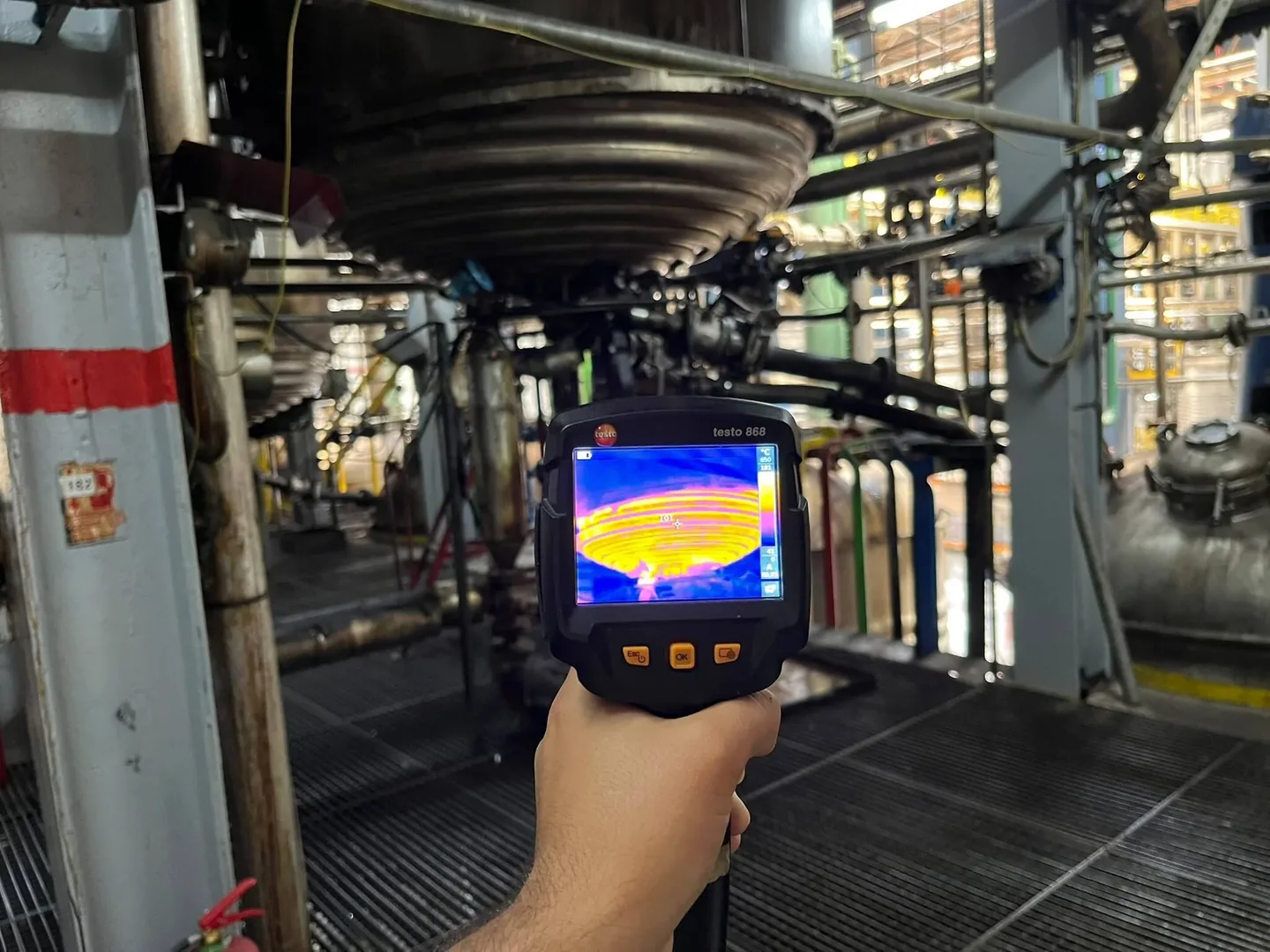
Each loss point is documented with a regular photograph and a thermal image.
Annual energy loss is calculated in kWh/yr; the financial impact is estimated with the stated unit price assumption.
Findings are ranked by size of loss, contact risk and ease of installation.
A thermal camera shows the surface temperature distribution and quickly locates damaged, missing or wet insulation and thermal bridges. Heat loss itself is not imaged; it is calculated from the measured surface temperature, ambient conditions and surface properties.
For reliable results, emissivity and reflected temperature settings, wind and sun conditions during the measurement and the line's operating temperature are recorded. On shiny metal surfaces such as aluminium or stainless steel cladding, emissivity is low; the camera sees reflections of hot or cold objects nearby and shows a surface temperature that differs from the real one, usually lower. On these surfaces a reference point is created with tape or paint of known emissivity, or readings are verified with a contact thermometer. Areas with abnormal temperatures are findings that require further inspection for moisture or corrosion under insulation; a thermal image alone is not a definitive diagnosis. See the field measurement section of our ISO 12241 guide for details.
Scope and pricing depend on the size of the plant and the number of lines to be inspected. Please contact us for details.
Thermal site survey, identification of loss points, annual energy loss and financial impact estimate, prioritisation and a PDF audit report.
Two thermal audits a year, comparison with previous records, detection of points left open after maintenance and newly formed losses, periodic reports.
Four audits a year; continuously updated records and comparative assessment for plants with frequent maintenance and overhauls and extensive steam and hot process infrastructure.
OPTERM does more than report. For the needs identified in the audit, we prepare the installation quote and complete the work on site:
After installation, the relevant points are measured again and the before-and-after condition is reported. The installation quote is independent of the audit service; plants that commission an audit are under no obligation to have the work done by OPTERM.
No. Heat losses are measured most accurately while lines are at normal operating temperature. The measurement plan is prepared together according to the plant's safety rules and access conditions.
A thermal camera only shows surface temperature differences. Areas suspected of wet insulation or corrosion are reported as findings; a definitive assessment requires moisture measurement, opening the insulation or suitable non-destructive testing.
A single audit shows the current state. Because new losses can appear after maintenance, removals and line changes, periodic monitoring helps prevent such losses from continuing unnoticed for a long time.
No. Loss and savings values in the report are calculation results based on the stated assumptions. Actual values may differ with operating hours, temperature variations and energy prices.


 Türkçe
 Deutsch
 Français
 Nederlands
 Svenska
 Norsk
 Dansk