In biogas plants and cogeneration units, gas engine exhaust manifolds, turbocharger areas and connections to the waste-heat line run at high temperature under constant vibration. OPTERM designs and manufactures removable insulation jackets for these areas to suit the engine's maintenance plan.
On gas engines, the exhaust manifold and turbocharger area are major sources of heat load in the engine room. Jackets around these surfaces reduce the heat released into the room and the risk of contact with hot surfaces. Where exhaust heat is recovered, insulating the line between the engine and the waste-heat exchanger helps preserve the heat reaching the recovery equipment.
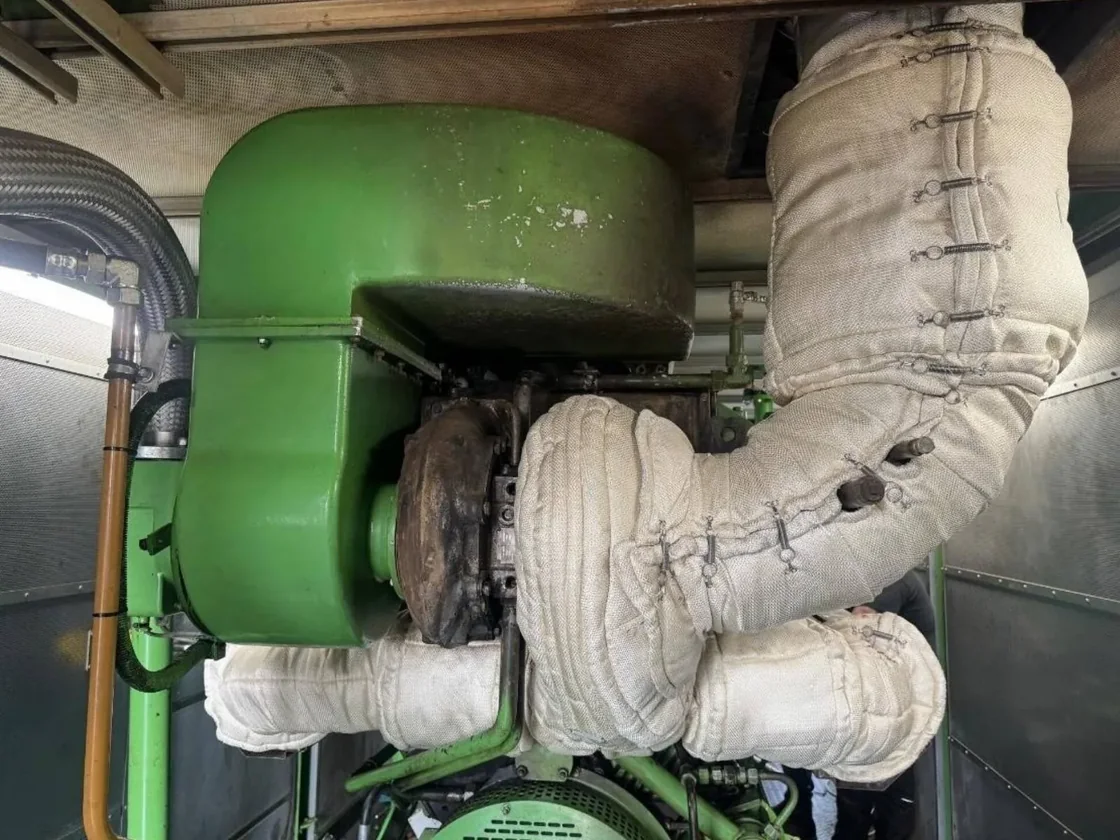
Jackets are secured with fastenings that do not loosen under engine vibration, with wear protection at rubbing points. Thermal growth of the manifold is accommodated by overlaps.
Jackets are divided into small, easy-to-remove sections with cylinder heads, spark plugs, sensors and exhaust connections in mind.
Zones that must stay cooled, sensor and thermocouple positions and the surface temperatures permitted by the manufacturer are taken into account in the design.
Engines in biogas and cogeneration plants run under conditions that need extra attention in jacket design.
The jackets reduce heat lost to the engine room and surroundings. How this affects overall efficiency depends on the plant's waste-heat recovery design; an exact figure can only be established by calculation or measurement.
Yes, but they are designed with the turbocharger's cooling and airflow requirements and the engine manufacturer's instructions in mind, and necessary zones are left open.
These jackets focus on the manifold and turbocharger zones close to the engine, where vibration is highest. Exhaust lines and aftertreatment equipment downstream of the engine are covered by exhaust system jackets.
Engine make and model, photos of the manifold and turbocharger area, exhaust line dimensions and maintenance intervals are enough for a preliminary assessment.


 Türkçe
 Deutsch
 Français
 Nederlands
 Svenska
 Norsk
 Dansk