

 Türkçe
Scope of ISO 12241
ISO 12241 (Thermal insulation for building equipment and industrial installations: Calculation rules) is the international standard defining how thermal insulation calculations are performed for building equipment and industrial installations. In Türkiye it is in force as TS EN ISO 12241.
The standard has a wide scope: heat loss, surface temperature, condensation risk and economic thickness calculations for pipelines, ducts, tanks, equipment bodies and all their connection elements are performed within this framework.
Four Core Calculation Criteria
ISO 12241 allows thickness calculation against four different targets:
- Surface temperature control: Keeping touchable surfaces below 50°C under ISO 13732-1 for personnel safety
- Heat loss limit: Not exceeding a specified maximum W/m or W/m² loss
- Condensation prevention: Keeping surface temperature above the dew point on cold service lines
- Economic thickness: The optimum thickness that minimises the sum of energy cost and investment cost
Calculation Method: Core Equations
The heat flux per unit length (q, W/m) for a cylindrical pipe is calculated as:
q = (Ti − Ta) / Rtotal
Where Ti is the internal fluid temperature (°C), Ta is the ambient temperature (°C) and Rtotal is the total thermal resistance (pipe wall + insulation + outer surface convection).
The thermal resistance of the insulation layer (Rins) follows the logarithmic formula in cylindrical coordinates; this is why the heat savings achieved on large-diameter pipes are more limited than on small diameters. ISO 12241 standardises this calculation for every pipe diameter and temperature condition.
What Does It Mean in Practice?
| Parameter | Typical Value / Note |
|---|---|
| Pipe temperature (steam line) | 180°C |
| Ambient temperature | 25°C |
| Target surface temperature | <50°C (safe touch) |
| Material: stone wool (λ) | 0.034 W/m·K @ 40°C |
| Calculated thickness for DN100 | ~80 mm |
| Annual energy saving (W/m) | ~100 W/m (vs ~200 W/m uninsulated) |
The table above shows why the "standard 80 mm is enough" approach is misleading: a DN50 pipe and a DN300 pipe at the same temperature require completely different thicknesses. "Standard thickness" chosen without an ISO 12241 calculation leads in practice to either energy waste or unsafe surface temperatures.
ISO 12241's Role in Site Inspections
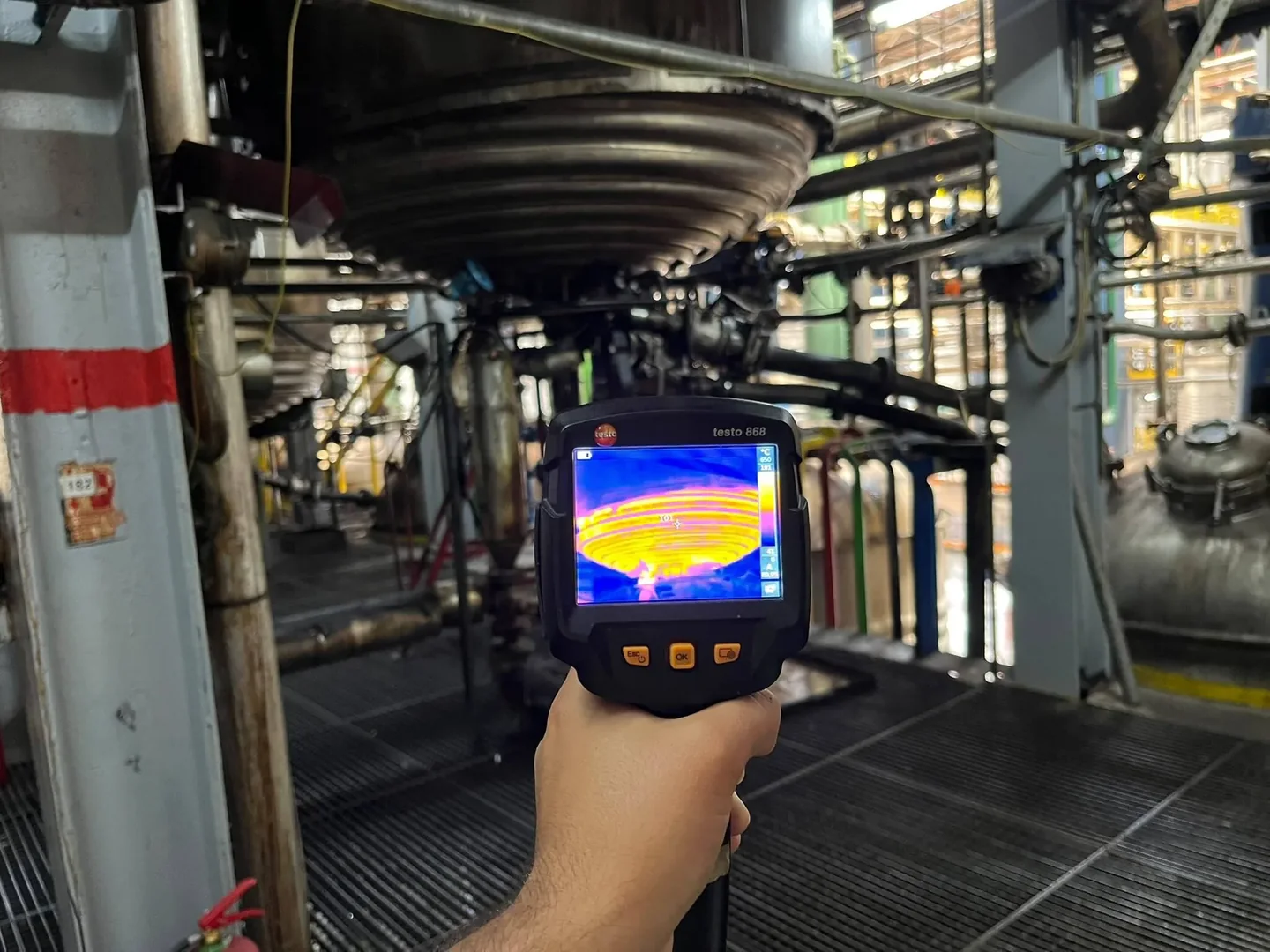
In thermal insulation audits, ISO 12241 forms the reference framework for performance verification. The surface temperature measured with a thermal camera is compared with the calculated value predicted by the standard. The gap between them points to insulation material degradation, moisture retention (and therefore CUI risk) or incorrect thickness application.
ISO 12241 Application in Insulation Jackets
In the design of removable valve and pipe jackets, ISO 12241 delivers two critical outputs: adequate insulation thickness and the expected surface temperature. These values are determined during the jacket design phase and verified by thermal camera measurement after installation, giving the customer documented proof of both energy savings and personnel safety.
Important note: ISO 12241 only defines the calculation method; material selection, installation quality and long-term performance remain the responsibility of the applicator. A standard-compliant calculation, correct installation and systematic inspection work together.
Conclusion
ISO 12241 is the scientific answer to "how much is enough?" in industrial insulation. Using this standard as the reference in thermal insulation projects simultaneously guarantees energy efficiency, occupational safety and cost optimisation. Every insulation application should rise from this foundation.
Request an ISO 12241-compliant thermal insulation audit
We assess the current insulation performance of your plant against the standard.